
Why Manufacturers Are Turning to End-of-Line Automation to Solve Today’s Labor Challenges
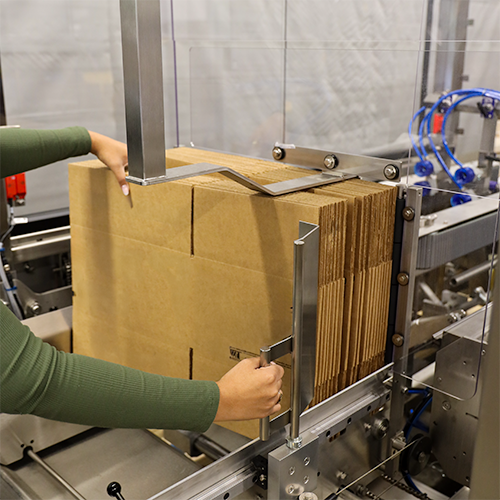
Labor shortages aren’t slowing down, but your production line doesn’t have to.
Finding skilled manufacturing employees has become one of the biggest challenges facing manufacturers today. Whether you’re producing food, consumer goods, medical products, or industrial components, keeping production lines fully staffed is becoming increasingly difficult.
Retirements continue to reduce the experienced workforce, fewer people are pursuing manufacturing careers, and competition for qualified employees remains high. As a result, many manufacturers are relying on overtime, cross-training existing employees, or delaying production simply because there aren’t enough people to keep operations running efficiently.
While hiring remains a priority, many manufacturers are realizing that automation offers another solution, one that improves productivity while allowing existing employees to focus on higher-value work.
Rather than replacing people, today’s automation systems help manufacturers make better use of the workforce they already have.
Why End-of-Line Packaging Is Often the Best Place to Automate
When companies begin evaluating automation, they often focus on their primary production equipment. However, one of the greatest opportunities for improving efficiency is frequently found at the end of the packaging line.
Processes such as case erecting, bag sealing, case lining, product loading, case sealing, uncuffing liners, and palletizing are repetitive, physically demanding, and essential to maintaining production flow. Even a small delay at the end of the line can create bottlenecks that reduce throughput across the entire operation.
By automating these tasks, manufacturers can keep products moving consistently while reducing manual handling and improving overall packaging line efficiency.
End-of-line automation also creates a more predictable production environment. Automated equipment performs the same task with consistent speed and accuracy, shift after shift, helping reduce variability that can occur with manual processes.
Automation Supports Employees Instead of Replacing Them
One of the most common misconceptions surrounding automation is that it exists to eliminate jobs.
In reality, many manufacturers simply can’t find enough people to fill open positions.
Ask almost any plant manager where hiring is most difficult, and the answer often points to repetitive packaging roles. These jobs involve lifting, bending, reaching, and performing the same motion thousands of times during a shift. They can be physically demanding and difficult to keep staffed over the long term.
Automation helps fill those gaps by taking over repetitive tasks while allowing employees to focus on responsibilities that require judgment, experience, and technical skills.
Instead of manually handling packaging materials all day, employees can monitor equipment performance, perform quality inspections, support preventive maintenance, troubleshoot production issues, and contribute to continuous improvement initiatives.
The result is a workforce that spends more time creating value and less time performing repetitive manual labor.
Improving Throughput Without Sacrificing Quality
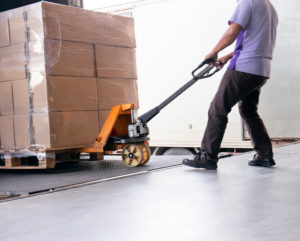
As customer demand grows, manufacturers need production lines capable of maintaining higher output without compromising product quality.
Manual packaging processes can become production bottlenecks as volumes increase. Fatigue, inconsistent handling, and staffing shortages can all impact packaging consistency and overall throughput.
Automated packaging equipment helps eliminate these challenges by delivering repeatable performance throughout every shift.
Benefits often include:
- Higher production throughput
- Improved packaging consistency
- Reduced product damage
- Greater equipment uptime
- Fewer production interruptions
- More predictable production schedules
For many manufacturers, improving packaging efficiency isn’t simply about producing more. It’s about producing consistently.
Creating a Safer Workplace
Safety remains one of the most important considerations in any manufacturing environment.
End-of-line packaging frequently requires employees to perform repetitive lifting, twisting, reaching, and bending. Over time, these movements can contribute to fatigue and increase the risk of workplace injuries.
Automating repetitive packaging operations helps reduce manual material handling while creating a safer working environment for employees.
Beyond protecting workers, improved safety can also reduce workers’ compensation claims, lost production time, and unexpected operational disruptions.
Investing in automation often benefits both employee well-being and long-term business performance.
Measuring the Return on Investment
Automation is often viewed primarily as a capital investment, but its long-term value extends far beyond reducing labor requirements.
When evaluating return on investment (ROI), manufacturers should consider the broader operational impact.
Potential benefits include:
- Lower labor dependency
- Increased production capacity
- Improved Overall Equipment Effectiveness (OEE)
- Reduced downtime
- More consistent packaging quality
- Lower product waste
- Reduced injury-related costs
- Better utilization of skilled employees
While every facility is different, many manufacturers discover that improvements in productivity, quality, and operational efficiency generate value well beyond labor savings alone.
Is Your Packaging Line Ready for Automation?
Every manufacturing operation has unique requirements, but several signs often indicate that automation could provide significant value.
Your operation may be ready if you are experiencing:
- Ongoing labor shortages
- Increasing overtime costs
- Difficulty filling packaging positions
- Production bottlenecks at the end of the line
- Inconsistent packaging quality
- Frequent manual handling injuries
- Growing customer demand without additional staffing
Addressing these challenges early can help manufacturers remain competitive while preparing for future growth.
Choosing the Right Automation Partner
Successful automation projects begin with understanding the specific needs of each production line.
Factors such as product dimensions, production speed, available floor space, packaging materials, and future expansion plans all influence the ideal solution.
Rather than applying a one-size-fits-all approach, experienced automation partners evaluate the entire packaging process to identify opportunities that improve efficiency while supporting long-term operational goals.
End-of-Line Automation Solutions from OK International
For decades, OK International has helped manufacturers improve packaging efficiency through reliable end-of-line automation solutions.
With operations in the United States, the United Kingdom, and the Netherlands, we work with manufacturers around the world to develop automation systems that improve productivity, enhance workplace safety, and support long-term growth.
Our automation portfolio includes:
- Supersealer® Bag Sealers
- Superformer® Case Erectors
- Superliner® Case Liners
- Superfiller® Bulk Weigh Fillers
- Supertaper® Case Tapers
- Supercloser® Uncuffers
- Robotic and Conventional Palletizing Systems
Every production environment presents unique challenges. That’s why our team works closely with customers to understand their application, production goals, and future growth plans before recommending a solution.
Preparing for the Future of Manufacturing
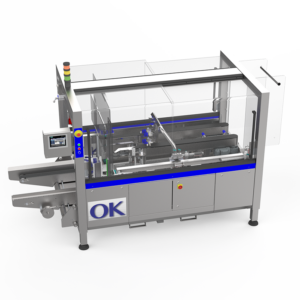
Labor challenges are unlikely to disappear anytime soon. Manufacturers that invest in smarter, more efficient production processes today will be better positioned to remain competitive tomorrow.
End-of-line automation isn’t about replacing experienced employees. It’s about giving them the tools they need to succeed while improving productivity, consistency, and workplace safety.
Whether your goal is increasing throughput, reducing manual handling, improving packaging quality, or preparing for future growth, automation can play a critical role in building a more resilient manufacturing operation.
If you’re exploring ways to improve your packaging line, OK International can help you identify automation solutions tailored to your production requirements. The right investment today can help create a safer, more efficient, and more competitive manufacturing operation for years to come.
